The team conducts research and develops innovative lubrication systems, analyzes fuels, lubricants, and technical fluids, and studies the tribological properties of materials.
We combine scientific research, laboratory testing, and practical engineering to enhance machinery reliability, improve resource efficiency, and promote environmental safety.


The global industry is shifting toward solutions that reduce energy loss, extend component life, and minimize emissions. Tribology is central to this transition — optimizing friction, wear, and lubrication provides both economic and environmental benefits. For Ukraine, it also means alignment with EU standards and integration into global supply chains.
European Standards and Sustainability
Ukraine’s path toward the EU requires implementing systems that meet safety, efficiency, and sustainability standards. This drives demand for innovative lubricants and technical fluids certified according to EN standards.

Global Demand for Tribological Research
The importance of tribology — the science of friction, wear, and lubrication — is growing globally. High-durability systems reduce energy consumption and extend machine lifespan, directly supporting the objectives of the green economy.

Opportunities for Collaboration
With our scientific schools and in-house laboratories, we are able to meet the needs of European and international companies. This creates opportunities for foreign investment and integration of Ukrainian expertise into global supply chains.



Analysis of fuels, lubricants, and technical fluids in certified and research laboratories



Development of technologies for the production and practical use of nanostructures



Study of the tribological properties of materials and lubricating media



Wear resistance and endurance testing of machine parts and materials



Endurance testing and technical support of products under real operating conditions



Development and implementation of innovative lubrication systems that meet safety, efficiency, and environmental standards

We combine UkrSURT’s strong academic base, Algorithm Group’s implementation experience, and the deep expertise of international partners.

Scientific School and Team
The focus area brings together professors and associate professors from the departments of Mechanical Engineering, Railway Car Engineering, and Materials Science, ensuring a balance of strong theoretical foundation and practical expertise.

In-House Testing Laboratories
Our specialized laboratories enable comprehensive chemical analysis and endurance testing of materials and technical fluids.

Industrial Partners
We have experience working with companies from Ukraine’s mining, metallurgical, and mechanical engineering sectors. Our solutions have been tested and proven in real industrial environments.

Access to International Markets
Our developments comply with European environmental and technical standards, facilitating integration into European engineering projects and collaboration with international partners.

Serhii Voronin
Doctor of Technical Sciences, Professor, Head of Department, Head of the “Fuel and Lubricant Technology, Tribology, and Materials Science” focus area
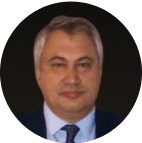
Edvin Hevorkian
Doctor of Technical Sciences, Professor, Department of Railway Car Engineering and Product Quality

Dmytro Onopreichuk
PhD in Technical Sciences, Associate Professor, Department of Mechanical Engineering and Machine Maintenance

Volodymyr Stefanov
PhD in Technical Sciences, Associate Professor, Department of Mechanical Engineering and Machine Maintenance

Oleksii Suranov
PhD in Technical Sciences, Senior Lecturer, Department of Mechanical Engineering and Machine Maintenance

Oleksandr Kebko
Head of Laboratory, Department of Mechanical Engineering and Machine Maintenance

Oleksandr Volkov
Postgraduate Student, Department of Mechanical Engineering and Machine Maintenance

Vitalii Hamora
Postgraduate Student, Department of Mechanical Engineering and Machine Maintenance
ACADEMTEST Laboratory for Testing Materials and Structures
The laboratory is accredited by the National Accreditation Agency of Ukraine and operates in accordance with international standards, including ISO/IEC 17025. It provides objective quality verification and prepares full protocol packages.
Features
• high-precision equipment: universal testing machines, hardness testers, spectrometers, optical devices;
• many years of experience in industry, energy, transport, and the defense sector.
Services
• non-destructive testing;
• mechanical testing;
• hardness testing;
• other tests.
INTEROILANALYTICS Laboratory for Fuel and Lubricant Analysis
The laboratory performs comprehensive chemical and physico-chemical analysis of products according to international standards. It provides reliable results to determine the quality, service life, and compliance of products with regulatory requirements.
Features
• professionally calibrated equipment;
• complete database of test methods;
• focus on the needs of industrial and transport companies.
Services
• analysis of the composition and properties of lubricants and fluids;
• determination of additive content;
• evaluation of residual life of fuel and lubricants;
• detection of impurities and wear indicators.
VIATEST Laboratory for Determining Physical and Mechanical Properties of Construction Materials
The laboratory studies materials used in the construction, repair, and maintenance of roads and engineering structures. It ensures accurate results thanks to the team’s long-term experience, modern equipment, and top-tier methodologies.
Features
• wide range of tests on road and construction materials;
• testing of transport and operational properties of roads;
• modern laboratory equipment;
• quality control during works;
• expert assessment with high precision.
Services
• analysis of soils, sand, crushed stone, and mixtures;
• testing of concrete, cement, and reinforced concrete;
• evaluation of bitumen, asphalt, and road mixtures;
• testing of road signs and marking materials;
• quality control of works and structures.
Sectoral Research Laboratory “Chemotological”
Features
• research of critical transport infrastructure;
• advanced measurement and CAD/CAE modeling base;
• cooperation with industrial, ministerial, and transport partners;
• participation in developing industry documentation and standards.
Services
• analysis of fuels, oils, lubricants, and special fluids;
• wear resistance testing of parts and systems;
• development of devices to improve fuel and lubricant quality;
• research on the influence of electromagnetic fields on lubricant properties;
• creation of mobile stations for fine purification of petroleum products;
• synthesis of carbon nanoparticles to enhance oils and materials;
• participation in the development of lubrication systems for metro infrastructure;
• implementation of energy-saving technologies for fuel and lubricant purification.
Sectoral Research Laboratory “Traffic Safety”
Features
• research on critical transport infrastructure;
• advanced CAD/CAE modeling and measuring tools;
• cooperation with state and industry partners;
• participation in developing safety-related documentation.
Services
• development of devices and systems for worker warning on rail tracks;
• implementation of safety enhancement tools for train and shunting operations;
• research and modernization of technical solutions within state and industry programs;
• participation in implementing safe high-speed train movement concepts in Ukraine;
• development and testing of automatic warning systems, tonal track circuits, and point sensors;
• innovative designs for integrated monitoring systems of rolling stock and infrastructure;
• creation of training labs and introduction of innovations in specialist education.

Logistics and Transport
Development of the first-ever Network Statement in Ukraine for Ukrainian Railways as part of EU railway directive implementation.

Energy Efficiency
Energy audit and cataloging of thermal power equipment for UkrGasVydobuvannya (the largest Ukrainian gas producer) facilities.

Reconstruction and Construction
Engineering support for the construction of the agglomeration plant and gas treatment systems at the converter shop of ArcelorMittal (2015–2017).

Chemotology and Materials Science
Modernization of the pelletizing plant at the Northern Iron Ore Beneficiation Works (Metinvest), including the implementation of new equipment (2019–2020).

Logistics and Transport
Optimization of grain logistics in partnership with the University of the West of Scotland under the UK–Ukraine R&I Twinning Grant.
Let’s Connect
Thank you.
Your information has been successfully submitted, and we will contact you shortly.

© AI Science Park 2025 | All rights reserved

UA